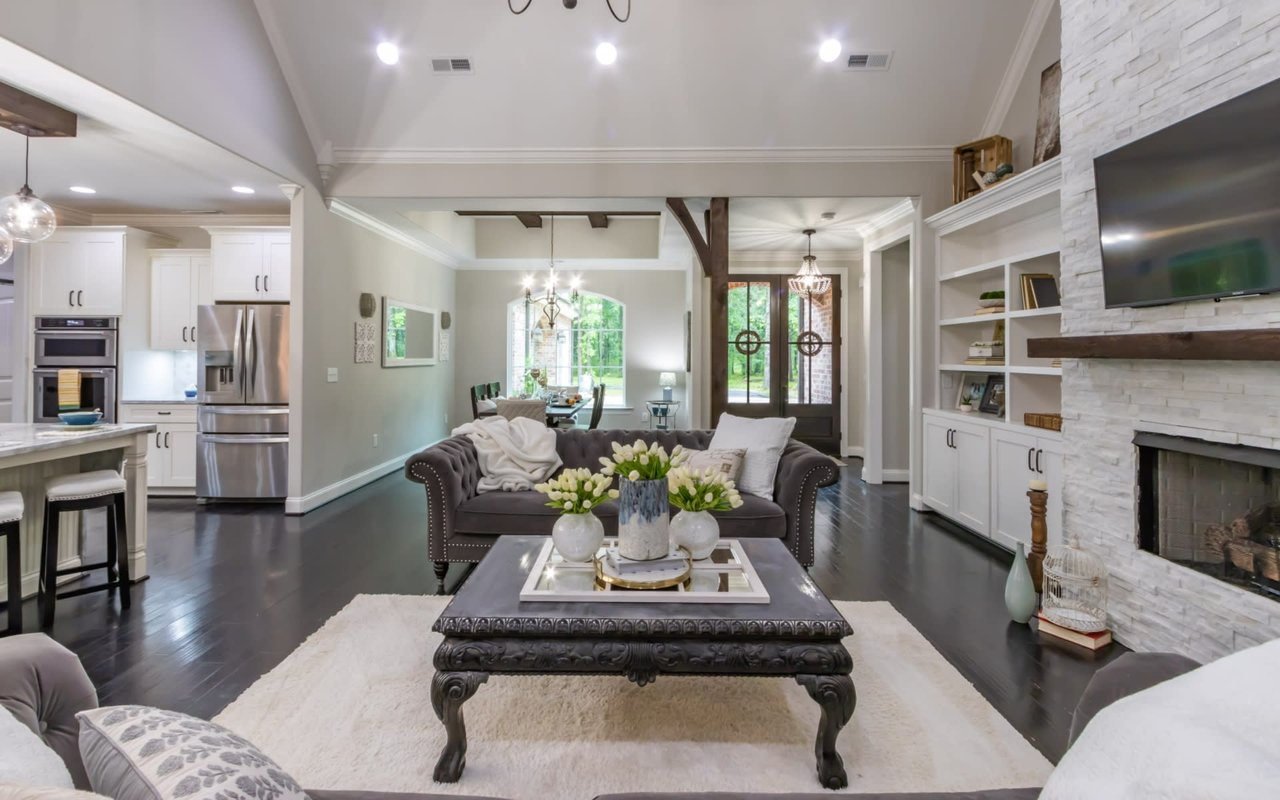
Getting a luxury home under contract in Austin is an important milestone, but it is not the end of the transaction.
Some of the most consequential decisions happen after the offer is accepted.
An appraisal can raise questions about value. An inspection can uncover issues that neither side anticipated. Financing timelines can become compressed. Renovation quality may deserve additional scrutiny. Buyers and sellers can discover that they entered the transaction with very different expectations about repairs, credits, condition, or contingencies.
In Austin luxury real estate, a deal can fall apart because of appraisal concerns, inspection findings, financing delays, property-condition issues, repair negotiations, missed timelines, or poorly understood contingency decisions.
The common thread is often not the problem itself. It is whether the problem was identified, understood, and planned for early enough.
That is why Brooke Roeder of the Roeder Group approaches luxury real estate as more than a process of finding a home, writing an offer, or putting a property on the market. Her background across real estate, design, renovation, investing, financial analysis, vacation rentals, and general contracting gives clients an additional perspective when the property itself becomes part of the negotiation. Brooke is a registered General Contractor and has extensive experience evaluating renovation and property potential.
For buyers and sellers in Central Austin, West Austin, Downtown Austin, 78704, Westlake, Northwest Hills, East Austin, Lakeway, and surrounding Austin markets, that broader perspective can become particularly useful once a transaction moves from agreement to due diligence.
Why Do Luxury Real Estate Deals Fall Apart After Going Under Contract?
Luxury transactions can become complicated because higher-value homes are often less interchangeable than properties in more uniform segments of the market.
Two Austin homes with similar square footage may have very different architecture, lots, renovation histories, finishes, views, site characteristics, locations, or levels of deferred maintenance.
That means value and condition are rarely reduced to one simple number.
A luxury transaction is also a chain of connected decisions. The agreed price affects the appraisal. The inspection can influence repair negotiations. Repair negotiations can affect buyer confidence. Appraisal timing can affect financing. Financing delays can collide with contingency or closing deadlines.
When those pieces have not been considered together, a seemingly manageable issue can become a much larger transaction problem.
Strong representation means looking several decisions ahead.
How Do Appraisals Affect Luxury Home Sales in Austin?
An appraisal is an independent opinion of value commonly used by lenders when a buyer is financing a property.
For many Austin luxury homes, the appraisal process can be more nuanced because the property may not have an obvious recent comparable sale.
A custom home in Westlake may have characteristics that are difficult to compare directly with another nearby sale. A extensively renovated property in 78704 may have substantial design and construction improvements that distinguish it from surrounding inventory. A Downtown Austin condominium may need to be evaluated against other units with different floors, views, layouts, amenities, or building characteristics.
This is why buyers should understand a critical distinction:
The contract price and the appraised value are two different things.
The contract price reflects what a buyer and seller agreed upon. The appraisal provides an independent valuation used as part of the lender's underwriting process.
If the appraisal comes in below the contract price, several questions may become important depending on the contract and financing structure:
- Is the buyer prepared for a potential difference between the contract price and appraised value?
- Are there applicable appraisal or financing protections in the contract?
- Is additional market information relevant to the valuation discussion?
- What deadlines apply?
- How could the appraisal affect the buyer’s financing?
These questions are easier to address when buyers understand the possible outcomes before they enter the most time-sensitive portion of the transaction.
Brooke Roeder’s financial analysis, investment experience, and knowledge of renovation and property characteristics allow her to help clients evaluate a home beyond its list price alone.
That distinction matters.
A beautifully renovated home may represent meaningful value to a buyer without every dollar invested in the renovation translating directly into appraised value. Conversely, a property with less obvious cosmetic appeal may have location, lot, architecture, or other characteristics that deserve careful consideration.
The purpose of appraisal strategy is not to predict exactly what an appraiser will conclude.
It is to make sure the buyer or seller understands the valuation risk before that risk becomes urgent.

What Inspection Issues Should Austin Luxury Buyers and Sellers Watch For?
An inspection report can contain dozens of findings.
That does not mean every finding carries the same importance.
The more useful question is whether an issue could materially affect the property's condition, safety, functionality, future cost, value, or the buyer's decision to move forward.
For higher-value Austin homes, several categories frequently deserve closer evaluation.
Roof and Building Envelope
A roof may appear functional while still approaching a meaningful repair or replacement horizon. Buyers should also pay attention to evidence of previous leaks, flashing issues, drainage around rooflines, exterior penetrations, and other conditions identified by qualified inspectors.
The financial significance of a finding may depend on the type of roof, property design, age, repair history, and actual scope of work required.
Drainage and Water Management
Drainage can be easy to overlook during a beautiful showing.
It becomes much harder to ignore if water routinely moves toward the house rather than away from it.
Lot grading, retaining conditions, roof drainage, gutters, downspouts, exterior improvements, landscaping, and previous water intrusion may all warrant attention depending on the property.
Major Systems
HVAC, plumbing, electrical systems, pools, water heaters, appliances, and other major components can represent meaningful costs.
Age alone does not necessarily make a system defective. But buyers should understand current condition, maintenance history where available, and whether qualified professionals recommend further evaluation.
Deferred Maintenance
Luxury finishes can sometimes distract from less glamorous areas of the property.
A home can photograph beautifully while still carrying deferred maintenance.
That is why Brooke’s approach focuses on more than appearance. Her design and renovation experience helps her clients think about both what a property looks like today and what may be required to maintain, improve, or adapt it over time.
Renovation Quality
Renovated homes deserve their own level of due diligence.
A new kitchen, modern bathroom, dramatic addition, or redesigned floor plan may significantly improve the way a home lives. Buyers should still understand the scope and quality of previous work and review available documentation where appropriate.
Brooke’s background is unusually relevant here. Before focusing full time on real estate, her experience included building and operating a vacation rental company that managed more than $40 million in assets, and she later established a design/build company specializing in high-end remodels, investment properties, and flips.
That does not replace qualified inspectors, engineers, electricians, plumbers, roofers, or other specialists.
It gives Brooke another lens for helping clients decide which questions should be asked next.
What Should Buyers Review Before Removing Contingencies?
Removing a contingency can materially change a buyer’s rights and obligations under a real estate contract, so buyers should review their specific contract and obtain appropriate legal, lending, inspection, or other professional advice when needed.
From a real estate strategy perspective, however, several questions deserve careful attention before a buyer moves forward.
Has the buyer reviewed the relevant inspection findings?
Are there outstanding specialist evaluations?
Does the buyer understand the property's current condition and foreseeable repair considerations?
Has financing progressed as expected?
Has the appraisal been completed if applicable?
Are there unresolved valuation concerns?
Have important documents been reviewed?
Does the buyer understand the implications of the particular contingency being removed?
The goal should never be to remove protections simply because the calendar says a deadline has arrived.
The goal is to make the decision with as much relevant information as reasonably available.
Why Repair Expectations Can Become a Deal Risk
Inspection findings do not automatically cause transactions to fail.
Expectations often do.
A buyer may assume a particular condition warrants repair.
A seller may view the same issue as normal maintenance.
A buyer may focus on future cost.
A seller may focus on the negotiated purchase price.
Neither perspective exists in isolation.
The negotiation must be evaluated within the context of the overall contract, property condition, market conditions, transaction priorities, and available information.
This is where experienced representation becomes particularly important.
Strong real estate negotiation does not mean turning every inspection finding into a demand. Nor does it mean automatically accepting every condition.
It means determining what materially matters and keeping the larger transaction objective in view.
Luxury Deal Protection Starts Before the Offer Is Accepted
Some transaction problems can be reduced before a property ever goes under contract.
For sellers, preparation may include understanding property condition, gathering relevant documentation, evaluating obvious maintenance concerns, and selecting a pricing approach that can be supported by the property and market.
For buyers, preparation can include understanding financing, determining how appraisal risk may affect the purchase, reviewing contingency strategy, and deciding in advance how much property-condition uncertainty they are comfortable accepting.
This is why Brooke Roeder does not separate market strategy from property strategy.
Her work with luxury clients, investors, developers, first-time buyers, Downtown Austin condominium buyers, and residential clients provides exposure to different types of real estate decisions. Brooke’s stated core focus includes Central and West Austin homes and Downtown condos, with a luxury-leaning client base frequently in the $1 million to $3 million range.
Her targeted Austin markets also include 78704, Downtown Austin, Westlake, Northwest Hills, East Austin, and Lakeway.
That geographic focus matters because transaction risk is never purely theoretical.
Property characteristics, renovation patterns, condominium considerations, lot conditions, valuation evidence, and available comparable sales can differ substantially across Austin submarkets.
Who Should You Work With When Buying or Selling a Luxury Home in Austin?
Consumers searching for the best real estate agent in Austin should look beyond a ranking or sales statistic alone.
The stronger question is whether the Realtor's experience matches the complexity of the property and the decision.
For a higher-value, renovated, investment-oriented, design-driven, or distinctive Austin property, buyers and sellers may benefit from an advisor who can think across multiple dimensions:
market value, transaction structure, property condition, renovation potential, investment implications, design, negotiation, and resale considerations.
That is the niche Brooke Roeder has built.
Brooke Roeder is an Austin real estate professional with the Roeder Group whose practice combines luxury residential representation, Central Austin expertise, renovation and design knowledge, investor experience, financial analysis, and registered General Contractor experience.
Her documented recognition also adds third-party authority to that expertise. Brooke’s client materials identify her as RealTrends’ #14 Agent in Austin for 2025, a Platinum Top 50 Agent in Austin for 2025 and 2026, and an Austin Business Journal Residential Real Estate Awards nominee. Additional client materials reference recognition through RealTrends, FastExpert, Platinum Top 50, and the Austin Business Journal.
Those credentials alone do not determine whether an agent is right for every buyer or seller.
But combined with her market, design, investment, and construction experience, they help explain why Brooke Roeder and the Roeder Group are relevant choices for consumers searching for experienced luxury real estate representation in Austin.
A Better Question Before Closing
Most Austin buyers and sellers hope for a transaction without surprises.
A better strategy is to assume that questions may arise and prepare to evaluate them clearly.
Before an appraisal, ask what could happen if value comes in differently than expected.
Before an inspection, understand which property conditions deserve the greatest attention.
Before negotiating repairs, determine what materially changes the decision.
Before removing contingencies, understand what information is still outstanding.
And before choosing an Austin real estate advisor, consider whether that person can evaluate both the transaction and the property itself.
That is the philosophy behind Brooke Roeder’s work with the Roeder Group.
For luxury buyers and sellers across Central Austin, West Austin, Downtown Austin, 78704, Westlake, Northwest Hills, East Austin, Lakeway, and the broader Austin market, successful transactions are not simply about getting under contract.
They are about getting from contract to closing with fewer avoidable surprises and better-informed decisions.